
 Intent
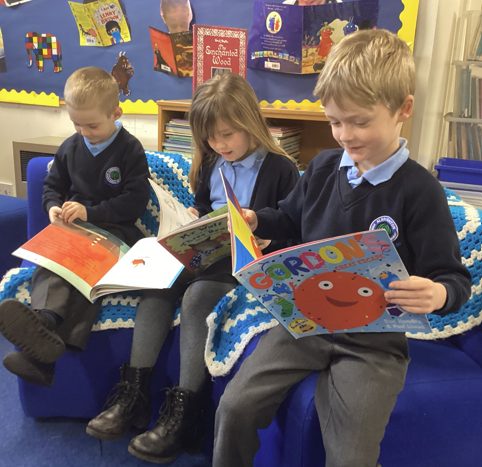
The intent of our Reading curriculum is to foster a deep and lifelong love of reading in every child. We aim to develop confident, fluent readers who not only have strong decoding skills but also possess the ability to engage with and enjoy a wide range of texts. Through a carefully curated selection of high-quality texts, we aim to broaden pupils’ vocabulary, comprehension skills, and ability to infer and predict.
Our curriculum is designed to immerse pupils in rich, engaging stories, both fictional and factual, that ignite their curiosity and encourage them to think deeply about characters, themes, settings, and contexts. We intend to create an environment where pupils actively explore the “hinterland” of books, connecting them to the wider world, and where reading is linked to their broader learning journey across all subjects.
Through regular exposure to a wide variety of texts, we aim to close the vocabulary gap, ensuring that pupils expand their language, develop the skills needed to express themselves clearly, and grow as independent thinkers. By the end of their time with us, we want children to be not only competent readers but enthusiastic ones, equipped with the skills and the passion to explore books independently, appreciate literature, and engage with the world around them through reading.
Implementation
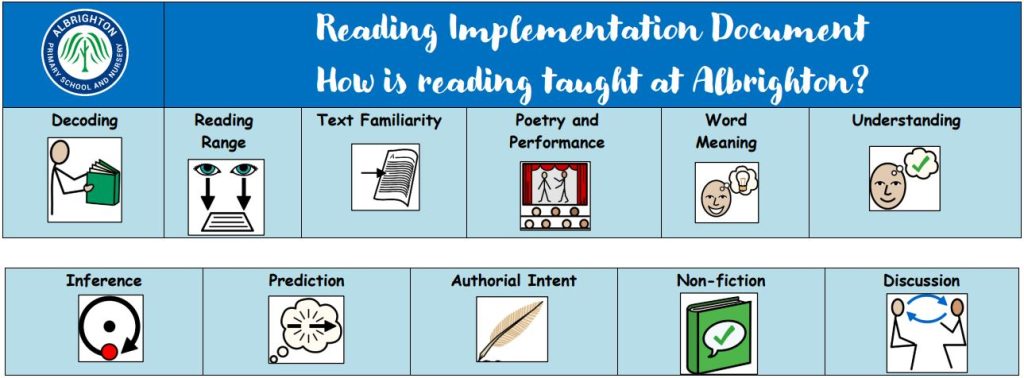
How we teach reading at Albrighton
At Albrighton Primary we use FFT’s Success for All Phonics.
Phonics Weekly Scope and Sequence
Reading skills progression Reception to Year 6
Impact
The impact of our Reading curriculum is evident in the confidence, enthusiasm, and achievement of our pupils as readers. Through our carefully structured and engaging approach, children are equipped with the essential knowledge and skills to become fluent, independent readers who can access and enjoy a wide range of texts. Pupils will leave our school with a love of reading and the confidence to discuss books with clarity and insight.
We measure the impact of our Reading curriculum through consistent progress across key stages, with pupils demonstrating significant progress in fluency, comprehension, and vocabulary. Pupils show the ability to infer, understand deeper meanings, and make connections between texts and the wider world. They will also be able to reflect on their learning, express their ideas with increasing sophistication, and apply their understanding of texts across different subjects.
The percentage of pupils working at ARE and Greater Depth within each year group will be at least in line with national averages. There will be no significant gaps in the progress of different groups of pupils (e.g. boys vs girls and disadvantaged vs non disadvantaged).
As a result of our focus on closing the vocabulary gap and fostering a deep understanding of language, pupils’ literacy skills are developed to the highest standards. Our pupils are well-prepared for future academic challenges and equipped with the reading and comprehension skills needed for success in life beyond school.
Ultimately, the impact of our Reading curriculum is that pupils not only achieve strong academic outcomes but also develop a lifelong love of reading that supports their personal growth, curiosity, and future learning
How to support reading at home
Supporting Phonics at Home: A Guide for Parents
Phonics is a vital part of early reading and writing development. It helps children understand the relationship between sounds and letters, forming the foundation for reading and spelling. Here are some simple ways you can support your child’s phonics learning at home:
- Practise Letter Sounds Regularly
Make sure your child knows the sounds of each letter. This can be done through fun activities like singing the alphabet song, using flashcards, or pointing to letters around the house. Emphasise the sound the letter makes, not just the name (e.g., the sound of “b” as in “bat”).
- Blending Sounds Together
Once your child is familiar with letter sounds, practice blending them to form simple words. For example, say the individual sounds in “cat” (/c/ /a/ /t/) and encourage your child to blend them together. Start with simple, three-letter words and gradually introduce more complex ones.
- Segmenting Words
Help your child break words down into individual sounds. For example, say a word like “dog” and ask your child to say the sounds they hear: /d/ /o/ /g/. This will support their ability to spell and write words correctly.
- Read Together Daily
Reading together is one of the most effective ways to reinforce phonics. The books your child brings gome Choose books that match your child’s current phonics level. Point to the words as you read, and encourage your child to sound out simple words on their own. Don’t forget to celebrate when they recognize words by themselves!
- Use Rhymes and Songs
Rhymes and songs are a fun way to reinforce phonics. Encourage your child to listen for rhyming words in stories or songs. This strengthens their ability to identify similar sounds, which is key in phonics learning.
- Interactive Phonics Games
There are many apps and websites with interactive phonics games that can make learning fun. You can also create your own games, such as “I Spy” with sounds or building simple words with letter blocks or magnetic letters.
- Be Patient and Positive
Every child progresses at their own pace. Celebrate their efforts and small achievements. A positive attitude and patience will keep them motivated to continue practicing.
By making phonics fun and part of your daily routine, you’re helping your child build the skills they need to become a confident reader.
Please find the link below to access the full catalogue of our Reception, Year 1 and Year 2 reading books at home.
Parent Portal